Email: sales@kaemi-oi.com Tel: 86-18305996352
Email: sales@kaemi-oi.com Tel: 86-18305996352
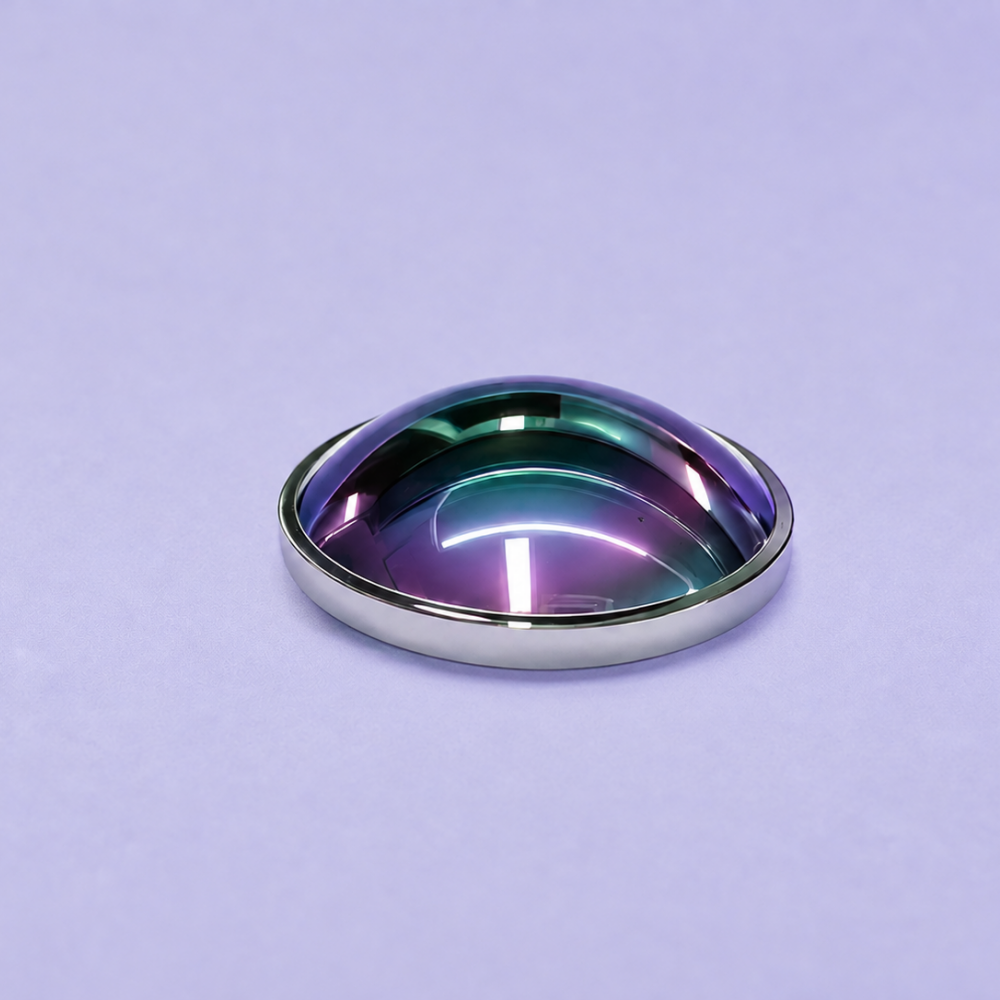
Spherical lenses suffer from image blurring due to spherical aberration, whereas aspherical lenses produce very sharp images. Consequently, aspherical lenses can replace groups of spherical lenses to correct aberrations; for instance, a zoom lens that typically employs ten spherical lenses might use just one or two aspherical lenses to replace five or six spherical ones, achieving equal or superior optical performance and lower production costs while enabling a lighter, more compact system. Furthermore, reducing the number of lenses lessens the system's sensitivity to mechanical tolerances and minimizes the need for additional calibration steps and complex anti-reflective coatings, thereby enhancing overall practicality and reducing total system design costs.
Incorporating aspherical elements into optical systems improves performance and allows for a reduction in the number of optical components, resulting in lighter, more compact, and structurally streamlined instruments. Aspherical elements are therefore frequently utilized in systems requiring wide fields of view, large apertures, high aberration correction, or compact designs. Thanks to their excellent optical performance, they have become an increasingly vital class of optical components.
Material | Size (mm) | Surface Error | High Precision Surface error | Surface Quality | High Precision Surface Quality | Center deviation |
Si, Ge, Al, Cu | 5~200 | PV<0.2μm, RMS<0.02μm | PV<0.15μm, RMS<30nm | Ra<5nm | Ra<3nm | ≤1′ |
Chalcogenide Glass, Crystal, Plastic | 5~200 | PV<0.2μm, RMS<0.02μm | PV<100nm, RMS<20nm | Ra<3nm | Ra<0.5nm | ≤1′ |
Optical Glass, Quartz Glass, Sapphire, etc. | 5~200 | PV<0.2μm, RMS<0.02μm | PV<100nm, RMS<20nm | Ra<3nm | Ra<0.5nm | ≤1′ |
PS: Provide various coating solutions. | ||||||
Contact: Sales
Phone: 86-18305996352
Tel: 86-18305996352
Email: sales@kaemi-oi.com
Add: Room 901, Building 3, No.32-1 Gaoxin Avenue, Shangjie Town, Minhou County, Fujian, China
We chat